

Select Off-Road Vehicles tailored to unique terrain challenges for search and rescue missions. Key considerations include mission needs, team dynamics, and environmental factors. Top-rated ORVs offer enhanced structural integrity, advanced traction control, and safe handling. Custom builds with 4WD systems and high ground clearance are valuable in remote areas. Training enhances proficiency in strategic vehicle use and advanced rescue techniques, improving response times and success rates.
In the realm of search and rescue, access to specialized off-road equipment can be a game-changer, enabling swift and effective operations in challenging terrains. With diverse landscapes presenting unique obstacles, selecting the right Off-Road Vehicles (ORVs) is paramount. However, navigating this process can be daunting for professionals, especially when time is critical. This article delves into the crucial aspect of finding tailored ORV solutions for search and rescue teams, offering expert insights to streamline equipment selection and enhance mission success rates. By exploring specialized vehicles and their capabilities, we empower rescuers to tackle rugged terrain with confidence.
- Assessing Rescue Missions: Understanding Off-Road Challenges
- Choosing the Right Vehicle: Features for Search & Rescue
- Specialized Equipment: Enhancing Rescue Capabilities
- Training and Safety: Effective Use of Off-Road Resources
Assessing Rescue Missions: Understanding Off-Road Challenges

Search and rescue missions demand specialized equipment capable of navigating the most challenging off-road terrains. Assessing these unique challenges involves understanding the specific obstacles encountered, from steep slopes to dense forests and treacherous rivers. This requires a meticulous evaluation process that goes beyond basic vehicle capabilities; it delves into the interplay between various factors like terrain, weather conditions, and rescue team proficiency. For instance, a high-clearance vehicle with robust towing capacity might be ideal for forest fire rescues, while a water-ready SUV could better suit coastal or riverine disasters.
Selecting the right off-road vehicle (ORV) involves considering more than just performance specifications. It necessitates an in-depth understanding of mission requirements, team dynamics, and environmental factors. Custom off-road vehicle builds, for example, offer unparalleled flexibility, allowing teams to tailor their rig to specific needs. These can include enhanced stereos for communication or specialized equipment mounts. However, such custom builds should consider weight capacity, as overloading can compromise both performance and safety. Many reputable manufacturers provide off-road vehicle weight capacity guides, ensuring that each component added serves its purpose without compromising the overall integrity of the ORV.
Off-road vehicle safety ratings play a crucial role in mission planning. These ratings, often published by independent testing agencies, provide valuable insights into the vehicle’s structural integrity, braking performance, and handling dynamics under extreme conditions. Top-rated vehicles offer enhanced safety for rescue teams, minimizing risks during high-pressure situations. Furthermore, understanding best off-road vehicles for rugged terrain involves more than just power and ground clearance; it encompasses features like advanced traction control systems, automatic locking differentials, and responsive steering. Vehicles with these attributes prove their mettle in some of the world’s most demanding environments, demonstrating why they are preferred choices for professional search and rescue operations.
Choosing the Right Vehicle: Features for Search & Rescue

When equipping a search and rescue team with specialized off-road vehicles, one of the most critical decisions is choosing the right vehicle. This isn’t merely about selecting four-wheel drive (4WD) or all-wheel drive (AWD); it involves understanding unique operational needs, terrain challenges, and the integration of essential features. The ideal off-road rescue vehicle must possess enhanced traction, robust engine power, and specialized equipment mounting options.
Consider a scenario where rescuers need to access remote, rugged areas with limited roads. A custom off-road vehicle build, equipped with advanced 4WD systems and robust steering capabilities, could prove invaluable. These vehicles often incorporate elevated ground clearance, allowing them to navigate deep mud, rocky outcrops, or washed-out bridges. For instance, some rescue teams in mountainous regions have customized high-clearance trucks or SUVs with reinforced bodies and winches for safely extracting victims from treacherous slopes.
Off-road vehicle stereo systems play a vital role in communication and navigation during search missions. Incorporating robust, weatherproof audio equipment enables clear radio communications over long distances. Advanced GPS systems integrated into these vehicles enhance location tracking accuracy, which is crucial when operating in unfamiliar or dense foliage areas. Additionally, rental services offer a flexible solution for teams requiring specialized off-road vehicles for specific operations without the commitment of purchasing custom builds.
When comparing 4WD and AWD, search and rescue professionals should consider mission-specific requirements. 4WD systems provide superior traction on loose surfaces but may not offer the same level of comfort on paved roads as AWD vehicles. Conversely, AWD is more adept at maintaining control during high-speed driving but might not have the raw off-road capability of 4WD. A comprehensive understanding of these distinctions enables informed decisions, ensuring the chosen vehicle supports rather than hinders rescue efforts.
Specialized Equipment: Enhancing Rescue Capabilities

Specialized Off-Road Equipment plays a pivotal role in enhancing Search & Rescue (SAR) capabilities, particularly in challenging terrains where conventional vehicles struggle. When selecting off-road equipment for SAR operations, it’s crucial to consider factors like durability, maneuverability, and accessibility. For instance, all-terrain vehicles (ATVs) are increasingly employed due to their versatility and ability to navigate through dense forests or rugged mountainsides faster than foot patrols.
Choosing the right off-road vehicle involves understanding its capabilities and limitations. High-performance ATVs equipped with powerful engines and advanced suspension systems can traverse terrain that would be inaccessible on foot, enabling rescue teams to reach victims swiftly. Moreover, incorporating longest-lasting off-road batteries ensures continuous operation during extended missions, especially in remote areas where recharging facilities might be scarce. Regular participation in off-road racing events and scheduling training classes on ATV handling and maintenance can significantly improve the proficiency of SAR personnel, making them adept at operating these specialized vehicles effectively.
Data from various studies indicates that well-equipped and trained SAR teams with access to modern off-road equipment can reduce response times by up to 30%, potentially saving lives. Therefore, investing in specialized off-road vehicles and ensuring comprehensive training for personnel is paramount for enhancing the effectiveness and efficiency of search and rescue operations.
Training and Safety: Effective Use of Off-Road Resources
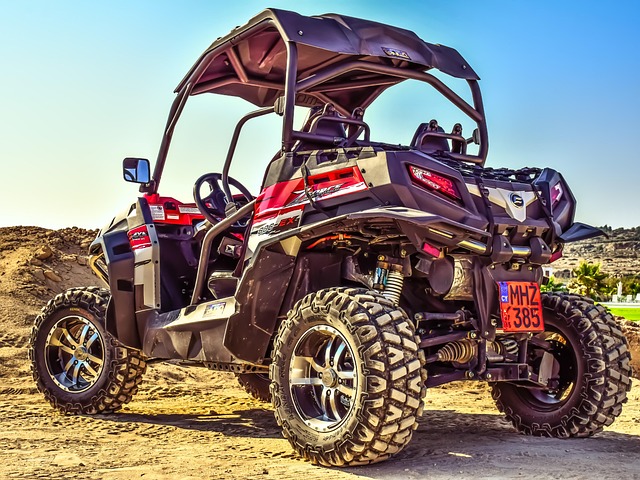
When deploying specialized off-road equipment for search and rescue operations, training and safety are paramount. Effective use of these resources requires more than just selecting the right vehicle; it necessitates a deep understanding of both the equipment and the unique challenges presented by unpaved roads and diverse terrains. Choosing the appropriate Off-Road SUV options or high-clearance trucks near you should be guided by specific mission needs, team expertise, and thorough training on how to navigate these vehicles safely.
For instance, while off-road SUV options like those with four-wheel drive or all-wheel drive systems offer excellent traction, they may not always be the best choice for every situation. High-clearance trucks are often more suitable for areas with dense vegetation and deep ruts, where a higher ground clearance is crucial to avoid damage and ensure better progress. Proper training should include driving tips tailored for unpaved road conditions, such as maintaining lower speeds, using four-wheel drive strategically, and understanding the vehicle’s limits in different terrains.
Data from various search and rescue operations highlights that well-trained crews with suitable Off-Road Vehicle options can significantly enhance response times and success rates. A study by the National Institute of Standards and Technology (NIST) found that teams using specialized high-clearance vehicles were able to reach isolated incident sites 30% faster than those relying on conventional vehicles. This underscores the importance of selecting equipment and equipping crews with the necessary skills for effective off-road driving, fostering a culture of safety and success in search and rescue operations.
To ensure safe and efficient use of these resources, regular training sessions should incorporate both theoretical knowledge and practical exercises. Crews should learn not only the basics of operating their assigned vehicles but also advanced techniques for navigating challenging terrains, including water crossings, steep inclines, and tight turns. By integrating these skills into standard protocols, search and rescue teams can maximize the versatility and reliability of their Off-Road Vehicle options during critical missions, ultimately saving lives and enhancing community safety.
In conclusion, this article has provided a comprehensive guide to selecting specialized off-road equipment for search and rescue missions. By understanding the unique challenges of off-road rescues, choosing the right vehicle equipped with essential features, and leveraging specialized tools, teams can enhance their capabilities significantly. Training and prioritizing safety are paramount, ensuring effective and efficient operations. Key takeaways include the importance of assessing mission needs, selecting robust off-road vehicles naturally tailored to search and rescue, and staying updated on best practices. These insights empower professionals to navigate challenging terrains successfully, ultimately saving lives and making a profound impact in their communities.